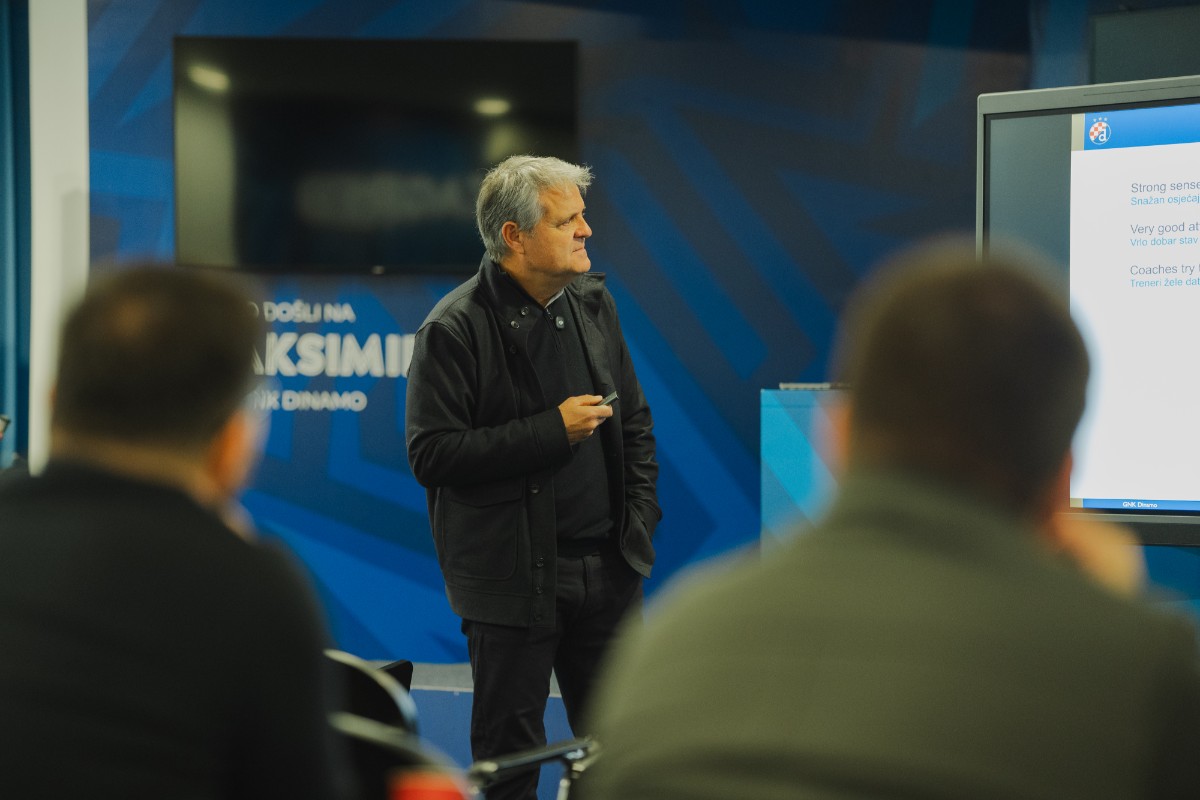
Director Capellas presents plan and development programme for the Academy and first team to the press
Presentation to the media
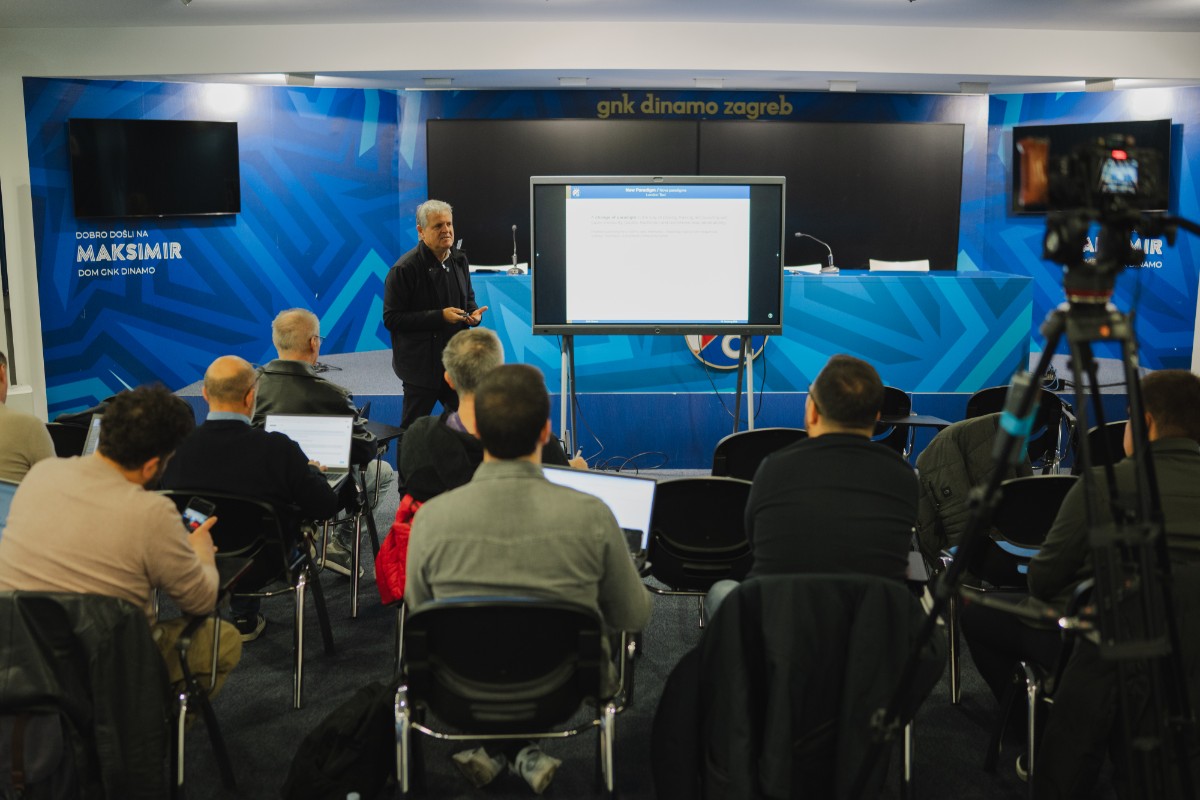
Dinamo's Director of Football and Head of the Club Academy, Albert Capellas, on Thursday revealed to media representatives, at a dedicated presentation, the vision and methodology of work applied across all age groups, from boys up to the age of seven all the way to the first team itself.
In a presentation lasting an hour and a half, Capellas outlined the key segments of the development plan and programme for the Academy and the first team through to 2030. The idea is that by then roughly 50 per cent of the players in the first team will come from the club's own Academy, regardless of whether they are Croatian or foreign.
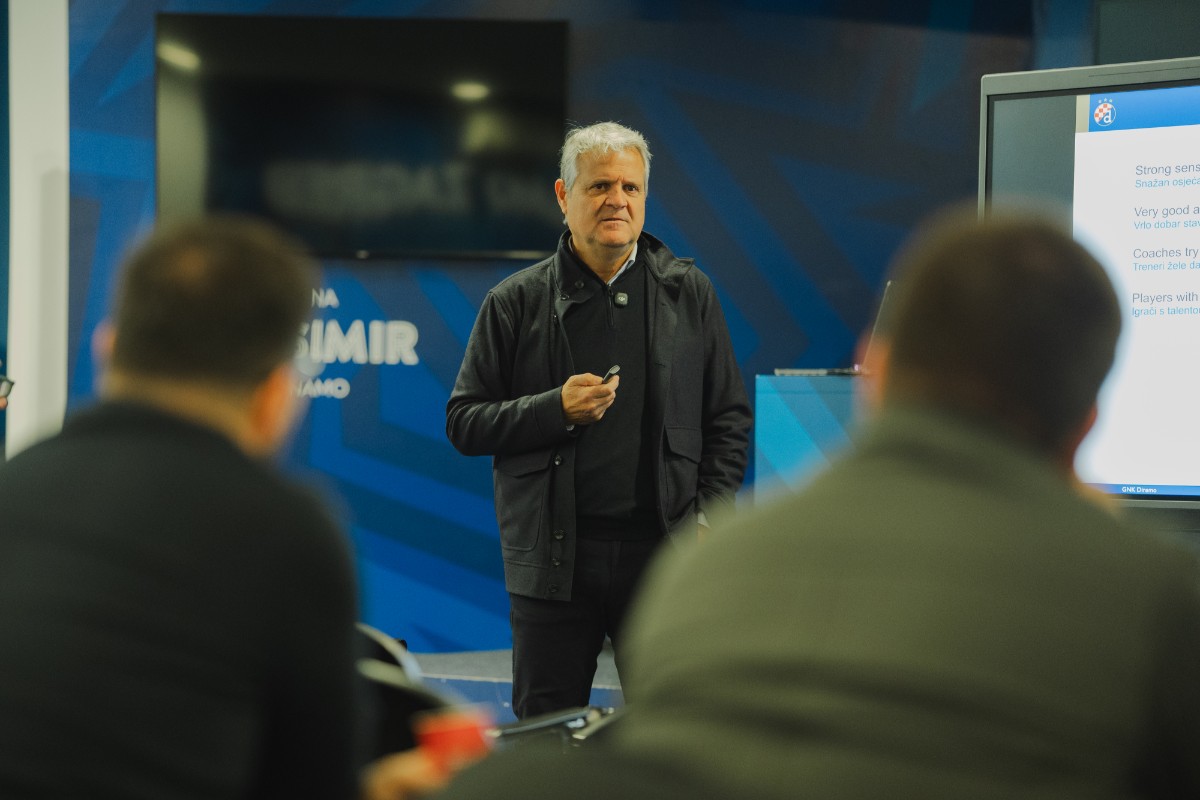
The foundations of progress are talent, dedication and courage. In addition, special emphasis is placed on emotion and passion for Dinamo, and on a clearly expressed bond with the supporters and the city. The idea is to cultivate dynamic, attacking football based on possession, pressing and proper positioning. Naturally, defensive contribution is important too, with a reaction already in the opposition's half. The basic system is 4-3-3, but coaches can adjust it at certain moments, as long as the philosophy of play remains the same. All of this is built upon with vertical play, recognising free space while quickly seeking the best solutions, combinations involving three or four players in the final third and, of course, as few passes back to the goalkeeper as possible.
An important initial stage of the project was observing the current situation, which also meant getting to know the character of the players and coaches, as well as the way they understand football. In implementing the new methodology, it is certainly important to retain those elements that have worked well so far, and Croatia, as a football nation, has solid foundations.
A positive attitude from everyone in the system is essential despite the many challenges. What matters is that coaches want to give their best, that players are marked by talent and hard work, and that they are willing to take risks and think outside the box... Talent is, of course, a natural gift that cannot be taught, but what matters is how to channel it and make the best use of it within the team. Talent brings victories, but structure and organisation of play bring trophies.
A positive atmosphere and a winning mentality are important elements. Players must understand that no one is more important than anyone else, that no one holds the absolute truth, and that football is subjective... Capellas also reminded those present that introducing a new paradigm in the way of playing, training and scouting often causes uncertainty, doubt, frustration and, at times, a lack of understanding. However, all of these are expected side effects of developmental processes of this kind.
In the first month at Dinamo, the emphasis was on observation; the following three months were dedicated to planning and design, with implementation coming in the first season. He described the second competitive year as one of consolidation, the third as one of improvement and progress, while in the fourth he expects a "snowball effect", which essentially means the promotion of players from the Academy.
This entire process, of course, also involves strengthening the winning mentality, which includes, among other things, a pronounced sporting spirit – the desire to win combined with an honest approach, fair play and top-level performance.
In scouting, it is important to select a specific profile for a particular position, that is, a player who would fit the basic principles outlined above. The approach within the Academy differs somewhat depending on the age group. For children from U-7 to U-10, it is important to instil the fundamentals: ball control, technique, awareness of the game... In the U-11 to U-14 categories, the emphasis is on formation, fitting into the system and creating automatic patterns of play. Only from U-15 up to the B team does the competitive element also become important.
Capellas highlighted the "five-second rule" as an important element, referring to the interval in which a player and the team must react and win back possession after losing the ball.
During the presentation, he also offered numerous video examples of various technical and tactical details of the 4-3-3 system, featuring actions from Dinamo's younger age groups. He pointed out that nothing happens overnight, but expressed satisfaction that more has been achieved in this past year than he had expected.
